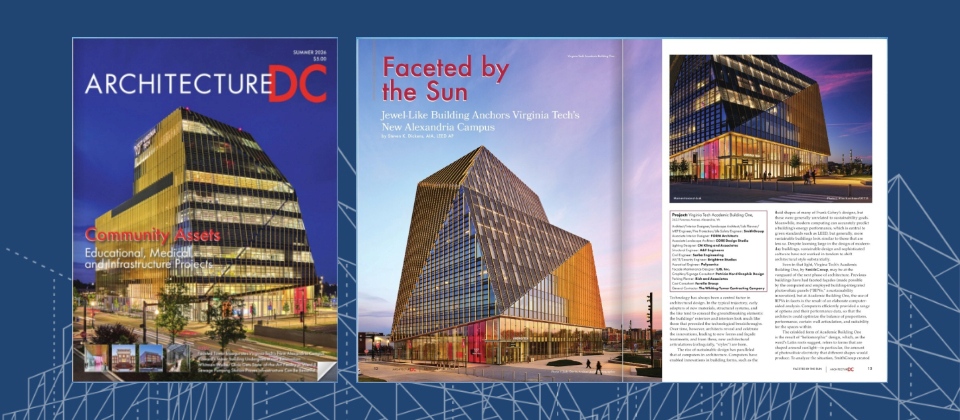
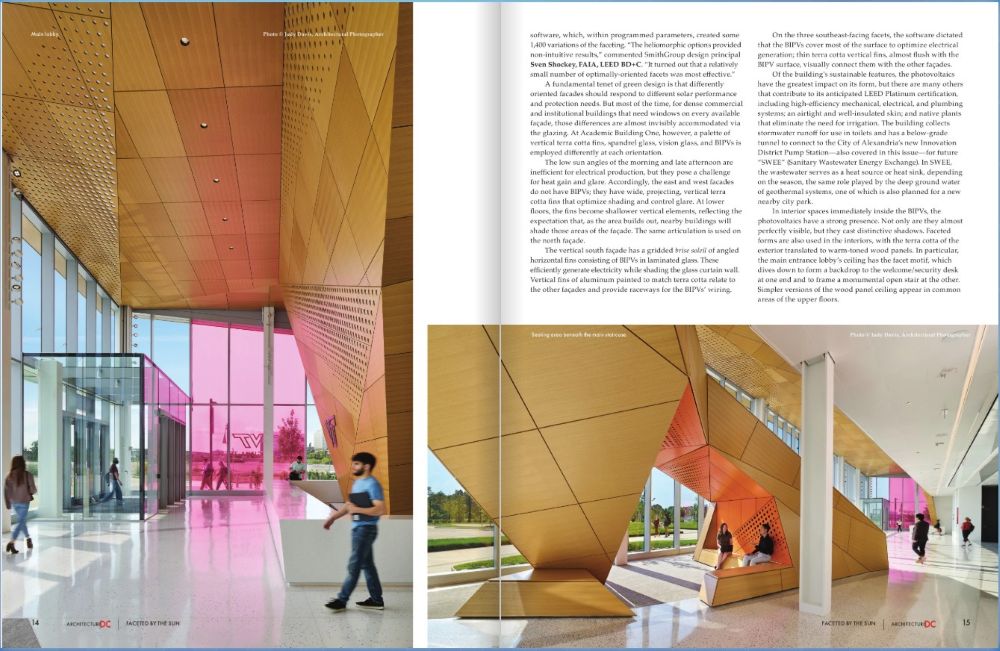
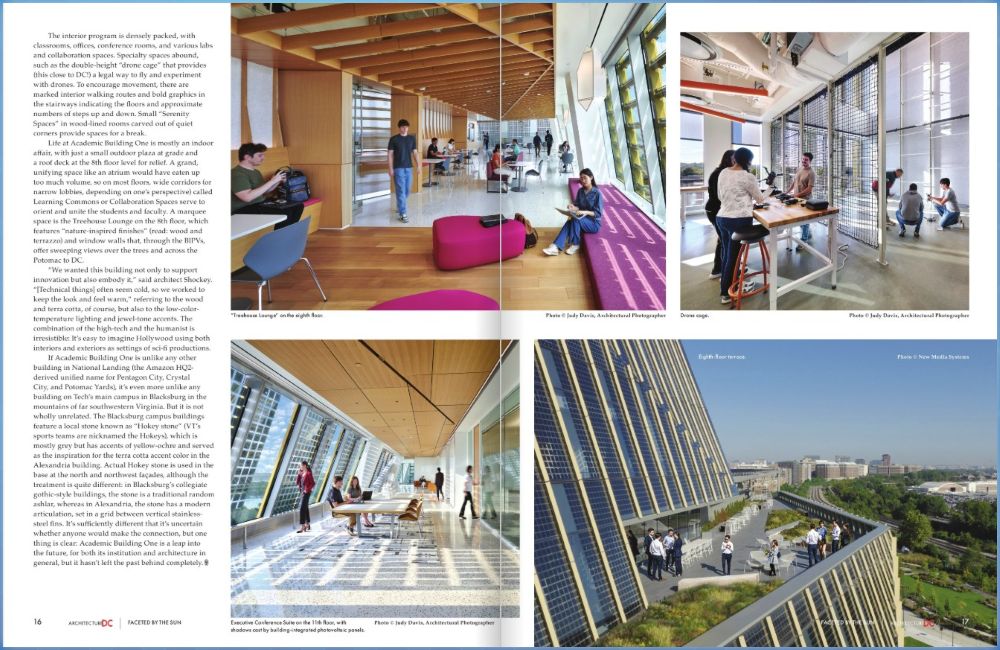
“Faceted by the Sun” article explores the distinctive, solar-responsive design of Academic Building One in Alexandria.
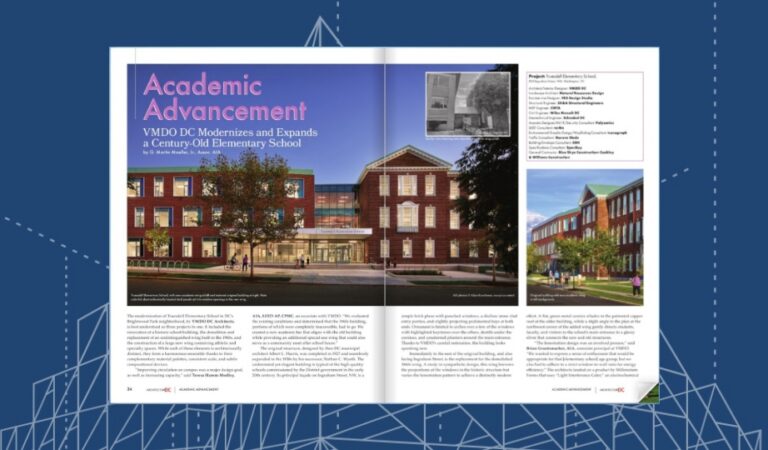
Virginia Tech Innovation Campus Academic Building One is featured in ArchitectureDC in “Faceted by the Sun: Jewel-Like Building Anchors Virginia Tech’s New Alexandria Campus.” Written by Steven K. Dickens, AIA, LEED AP, the article examines how advanced technology and sustainable design shaped the building’s striking faceted form.
Located in Alexandria’s National Landing neighborhood, the 11-story, 300,000-square-foot building is the first of three planned for Virginia Tech’s Innovation Campus.
The steel-framed building includes instructional, research, office, and support spaces for graduate-level programs in computer science and computer engineering, along with flexible multipurpose areas, advanced laboratories, and below-grade parking.
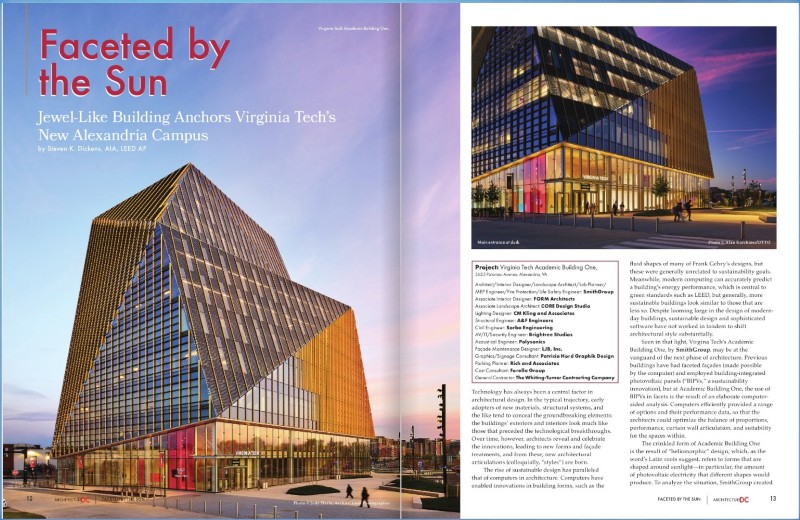
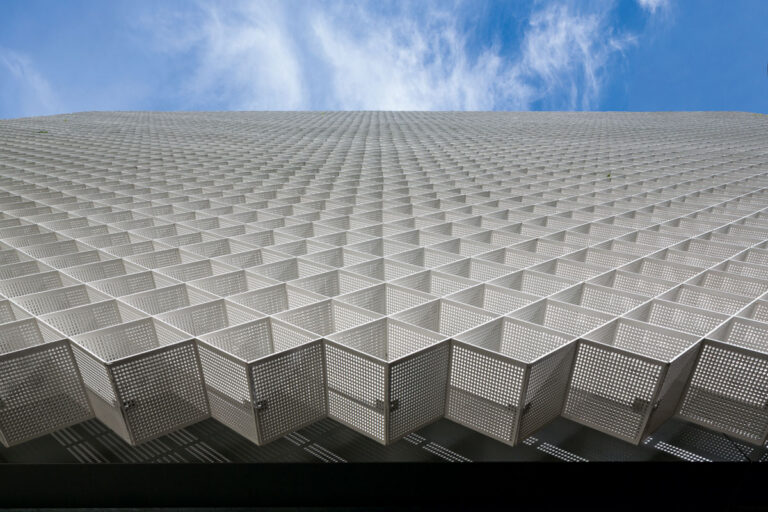
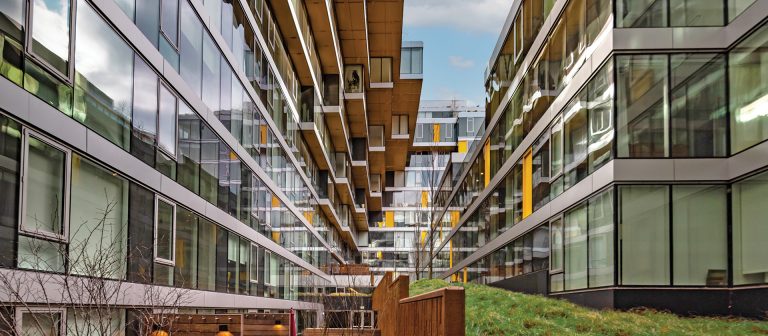
Designed by SmithGroup, Academic Building One uses what the article describes as a “heliomorphic” design approach, shaping the building around sunlight and the amount of photovoltaic electricity different configurations could produce. Computer-aided analysis generated approximately 1,400 variations of the building’s faceted exterior, helping the design team optimize energy performance, proportions, curtain wall articulation, and the needs of the interior spaces.
Inside, the faceted design continues through warm-toned wood ceilings, colorful accents, and angular gathering spaces. The building includes classrooms, offices, collaboration areas, specialized laboratories, a double-height drone cage, an eighth-floor “Treehouse Lounge,” and an outdoor terrace overlooking the surrounding neighborhood and Potomac River.
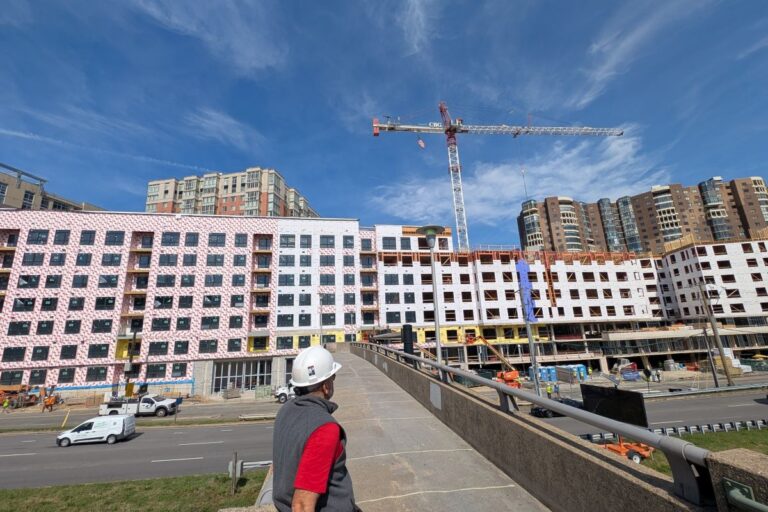
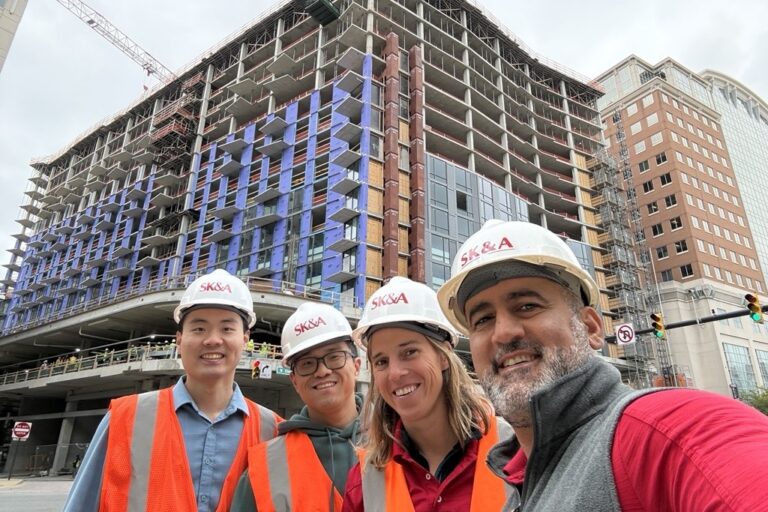
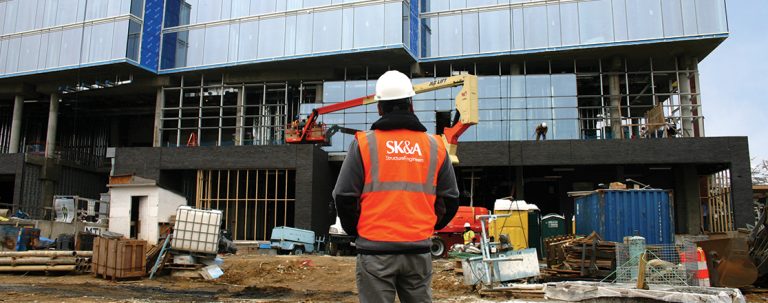
A&F Engineers served as the project’s structural engineer. SK&A’s role focused on special inspection, testing, and quality assurance during construction. Our scope included inspection and testing of structural steel, cold-formed steel, bolted and welded connections, spray-applied fire-resistive materials, and intumescent fire-resistive materials. SK&A also performed nondestructive examination, ground-penetrating radar scanning of concrete structures, and continuous, full-time quality assurance inspections of the building’s various roof assemblies.
We are proud to have contributed to the successful delivery of this forward-looking academic and research facility and pleased to see its innovative design recognized in ArchitectureDC.
Read the full Summer 2026 feature in Architecture DC Magazine here