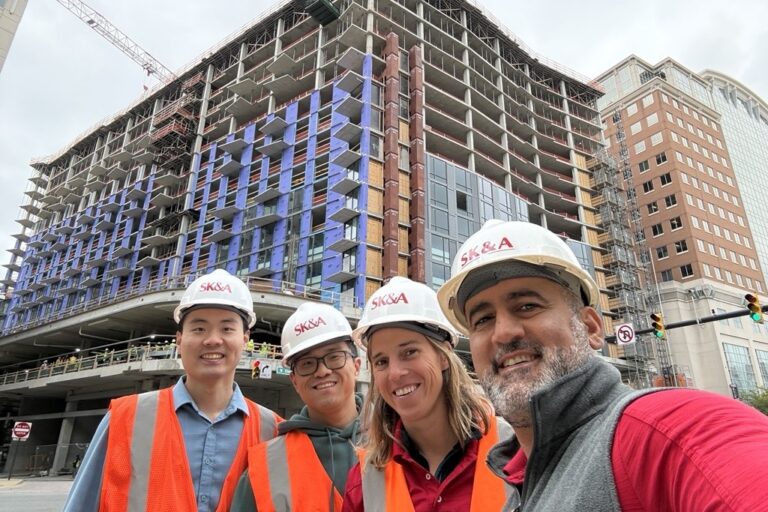
Authored by SK&A Project Manager Ammar Motorwala, PE. Follow Ammar on Linked In.
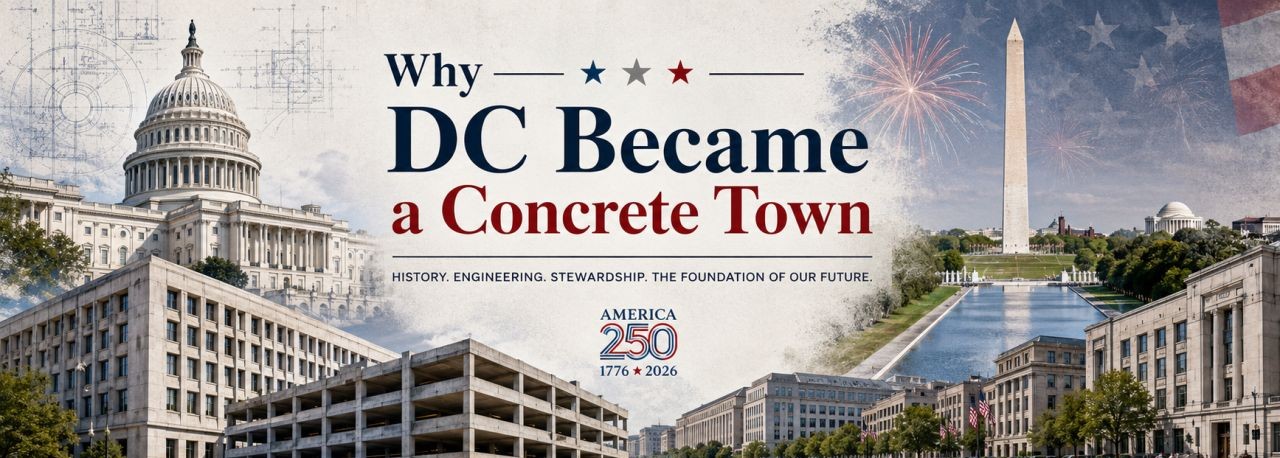
This Independence Day, while most eyes are on the fireworks over the National Mall, here is a construction question hiding in plain sight: Why does the nation’s capital skyline look the way it does?
As America celebrates its 250th anniversary, Washington, DC is naturally part of the national story. But there is another story worth telling — one that construction people may appreciate differently: Why is Washington, DC such a “concrete town” without a skyline of skyscrapers?
Most people have heard the common myths:
❌ “No building can be taller than the Capitol.”
❌ “No building can be taller than the Washington Monument.”
❌ “DC simply never became a skyscraper city.”
The real answer is more practical and more interesting.
In 1894, the Cairo apartment building rose to 164 feet, unusually tall for Washington at the time. It raised concerns about fire safety, light, air, and the future character of the capital city. Those concerns eventually led to the Height of Buildings Act of 1910, which tied building height to street width and set maximum height limits across the District. This Act shaped the skyline and the building stock in downtown Washington.
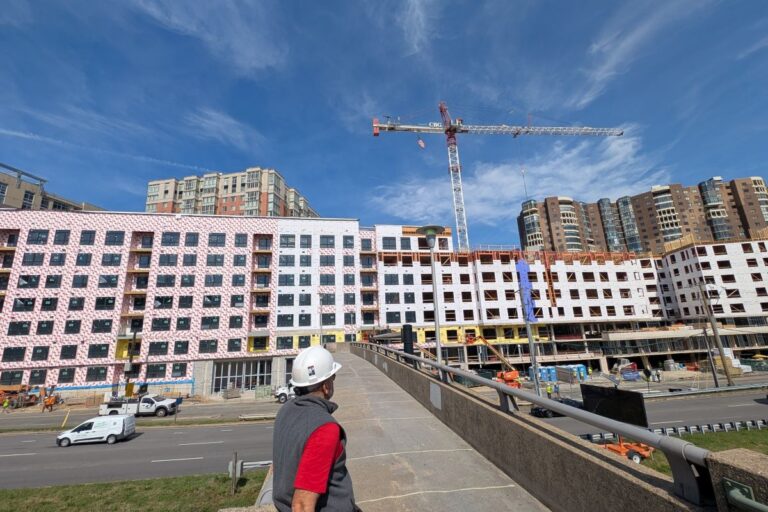
While New York and Chicago raced upward with steel-framed skyscrapers, Washington developed around a different scale of construction. Within a fixed height envelope, developers still needed to maximize leasable space.
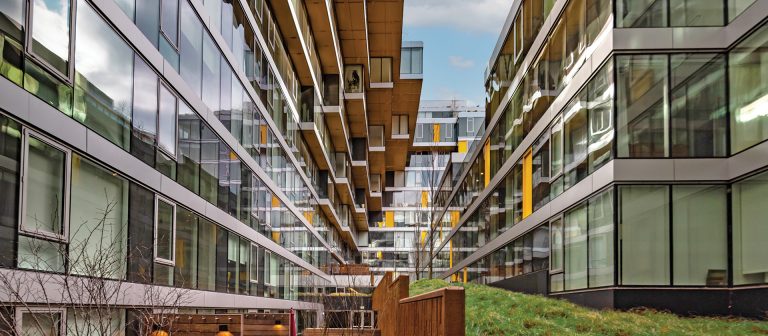
Thinner concrete floor systems, compared to deeper steel-framed systems, often allowed developers to fit additional floors within the same building height while offering architectural flexibility. The height limits shaped the scale of the city, which made concrete one of the region’s most practical structural materials.
The Act has been debated, studied, and selectively amended over the years. But its core idea largely remained because changing it would not just affect building heights — it would affect the way people experience the nation’s capital. It became part of Washington’s identity and the real estate market adapted to it. And the construction industry became highly skilled at working within it.
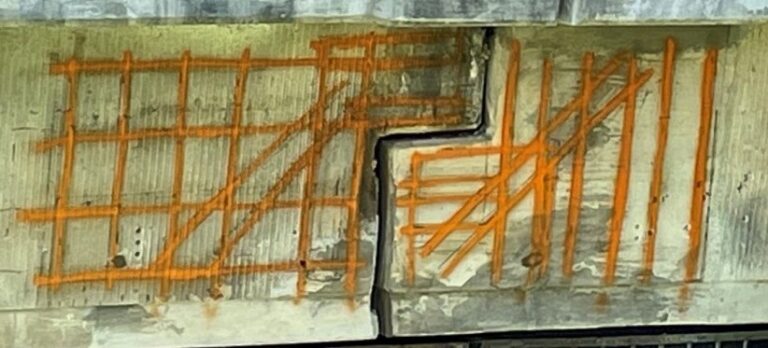
That history feels especially relevant today. As the region’s building stock continues to age, the future of construction in the DMV may not be defined only by what we build new. It may be defined by how well we care for what already exists. Extending service life as good stewardship.
As we reflect on 250 years of American history, it is worth remembering that our built environment is part of that story too. The buildings around us are records of decisions, constraints, craftsmanship, and changing priorities across generations.
Perhaps that is the real lesson from DC’s concrete legacy: The future of construction is not only about building higher or faster. It is also about building wisely, maintaining intentionally, and making good structures last.
SK&A’s Repair + Restoration team aids clients in developing and executing the most cost-effective strategies to meet their structural repair, restoration, and maintenance goals. Learn More.