An Engineering Insight authored by SK&A Director of Testing and Inspection, Charles Mitchell. Follow Charles on LinkedIn.
When existing conditions are uncertain, knowing what to inspect—and when—makes all the difference.
Special Inspections are often more challenging on repair and rehabilitation projects than on new construction because the Special Inspector must evaluate existing conditions, unknown construction details, and the interaction between new and existing materials.
Special inspections on repair projects require a higher level of professional judgment than those performed on new construction.
For repair projects, the challenge is that the Special Inspector often encounters unforeseen conditions that were not known when the contract documents were prepared. In those situations, the Special Inspector’s role is not to judge the adequacy of a repair, but rather to recognize and report deviations that may affect compliance with the approved documents.
In my experience, the Special Inspector must direct more focused attention to the interface between the existing structure and the new repair than to the repair material itself. Repair failures will usually occur at the bond line, anchorage, splice, or connection rather than within the repair material.
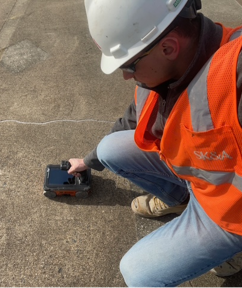
GPR Scanning
Pre-Repair Investigation
A pre-repair investigation is critical because it establishes the actual condition, causes of deterioration, and extent of damage before corrective work begins. Without a thorough investigation, repairs may address only visible symptoms rather than the underlying problem, resulting in premature failure, unnecessary costs, or even additional damage. For a special inspector, a pre-repair investigation is important because it provides the technical basis for determining which repairs are necessary, which inspections will be required, and whether the proposed repair is addressing the actual deficiency.
Before the structural work begins, the Special Inspector should verify that existing damages are properly documented, existing material strengths are known (concrete cores, masonry testing, steel testing, wood evaluation), repair limits match the approved contract documents, hidden deterioration has been addressed in the repair strategy and use NDE methods to gather pertinent data. Petrographic analysis is often one of the strongest technical justifications a special inspector can reference when supporting repair recommendations, especially when deterioration may be related to ASR, corrosion, freeze-thaw damage, sulfate attack, carbonation, mortar incompatibility, or historic masonry preservation concerns.
Demolition and Preparation
“The most critical phase of many repairs is not the repair itself but the preparation of the existing structural substrate. The inspector (along with the Engineer of Record) should confirm that the concrete is removed to sound material, that the reinforcing steel is cleaned to specified standards. (Refer to ICRI Rebar Cleanliness Level Guide 210.5R-2025, Guide for Selecting and Specifying Reinforcing Bar Cleaning Levels, RCL Bar Samples, and the RCL Digital App), that the surface roughening requirements (Refer to ICRI Concrete Surface Profile chips) are as specified, if the structure is masonry that unsound/deteriorated units are removed, and if the structure is steel-framed that the steel surface preparation is in accordance with AMPP requirements.
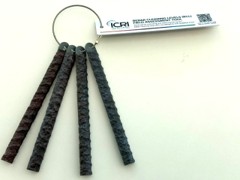
Rebar Cleanliness Level Samples
If preparation is inadequate, even high-quality repair materials will fail.
Anchorage Into Existing Construction
Many structural repairs rely on post-installed adhesive or expansion anchors and dowels. The Special Inspector must verify the drilled hole diameter and depth, the drilled hole cleanliness, the adhesive type and expiration date, the installation temperature, the embedment depth, and the Installation Torque/Impact Wrench Rating requirements of the anchor in accordance with the applicable ICC-ESR.
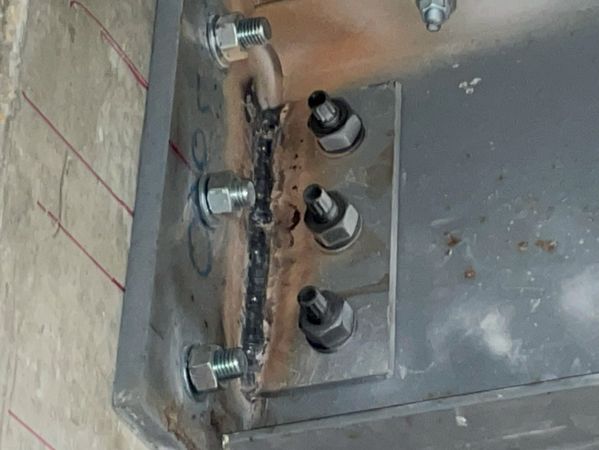
Post Installed Adhesive Anchors
Reinforcing Steel Repairs
The Special Inspector must verify and document bar size and grade, lap splice lengths, development lengths, concrete cover specifications, and corrosion protection systems. Particular attention must be paid when tying new reinforcing steel into existing reinforcing.
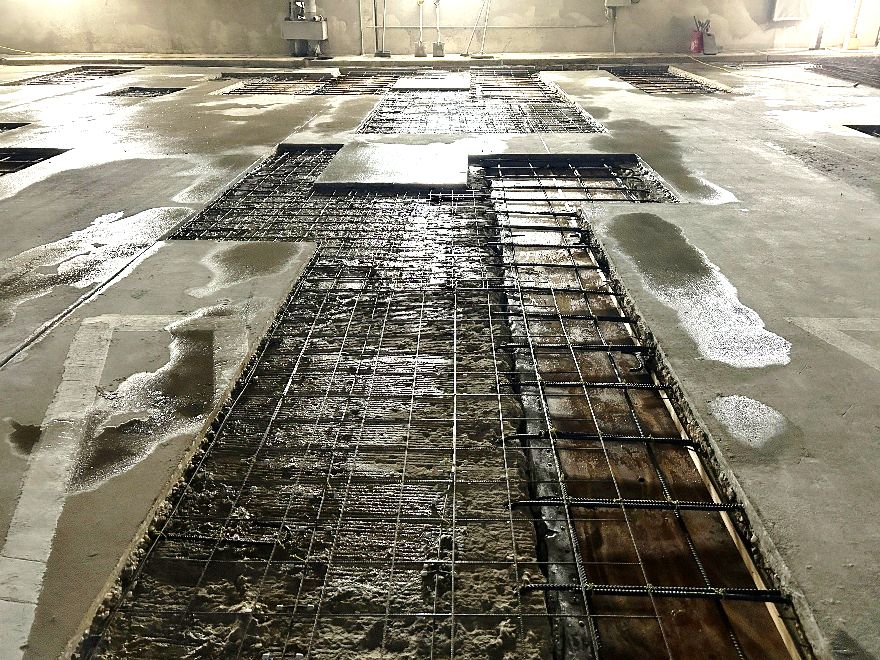
Concrete Cover & Lap Splice Lengths
Structural Concrete Repairs
Special inspection of concrete repair placement is performed to verify that substrate preparation, reinforcing steel repairs, placement procedures, material properties, testing, and curing comply with the approved repair documents and applicable standards. Proper inspection helps ensure the repaired concrete develops the required bond, strength, durability, and long-term performance intended by the design professional. When it comes to the repair concrete placement, the Special Inspector must verify that the repair material matches the approved project specifications, document water addition limits, monitor placement procedures, such as temperature, slump, air content, consolidation, surface saturated dry conditions or bonding agents, and curing.
For repair with high strength mortars and grout bag mixes, it is important to monitor the flow consistency/proportions of the mix ingredients and the placement temperatures.
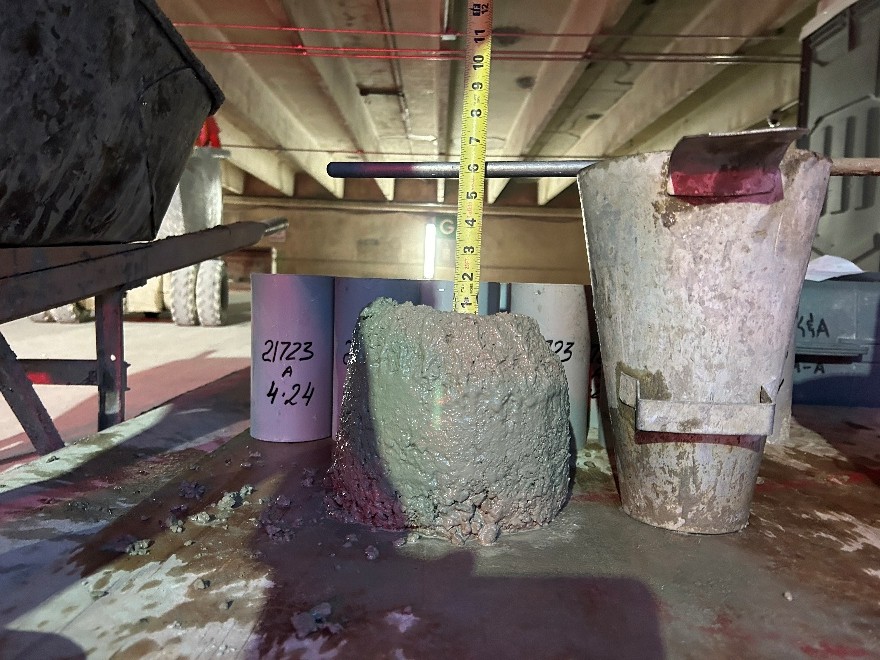
Slump Measurement
Structural Steel Repairs
For structural steel repairs and strengthening, special inspections are performed to verify that the repair and reinforcement work complies with the approved construction documents, applicable codes, and the structural engineer’s design intent. Existing steel structures often contain hidden deterioration, distortion, fatigue cracking, or section loss that must be properly addressed before strengthening measures are installed.
The Special Inspector must verify the existing structural steel conditions, the weld preparations, the need for Non-Destructive Testing (NDT) of welds, welding procedures (Welding Procedure Specification), welders’ qualifications, high strength bolt installation, and surface preparation and coating restoration. Field welds for repair projects occasionally occur in confined conditions where inspection access and adequate welding operations can be difficult.
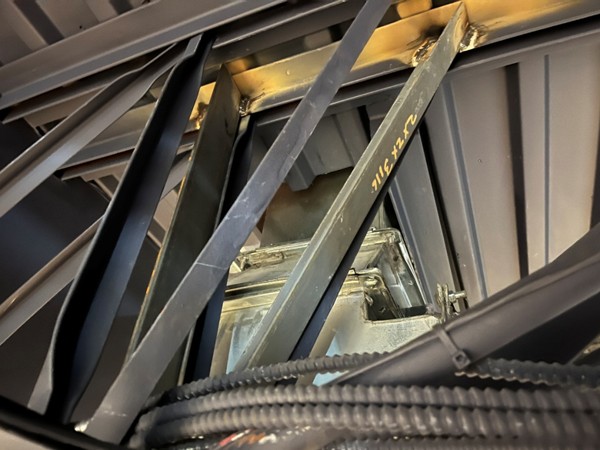
Existing Steel Joist Strengthening Challenges
Masonry Repairs
The Special Inspector must verify masonry unit (CMU or brick) replacement, repointing and/or tuckpointing materials, grout placement, vertical and joint reinforcing installation, and anchor replacement. For structural masonry repairs, verification of grout consolidation and bond are especially important.
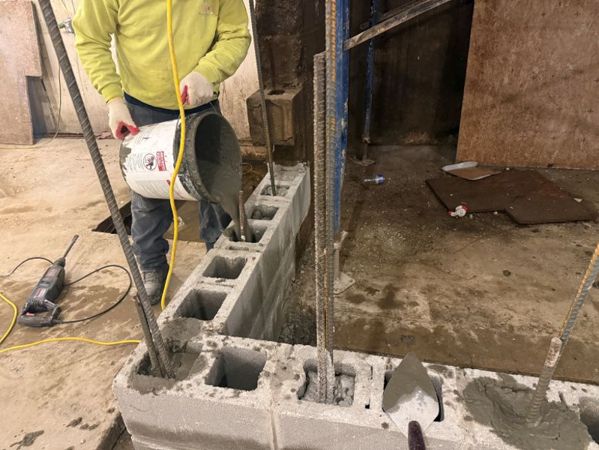
First Lift of Grout for CMU Shaft Wall
Temporary Shoring and Stability
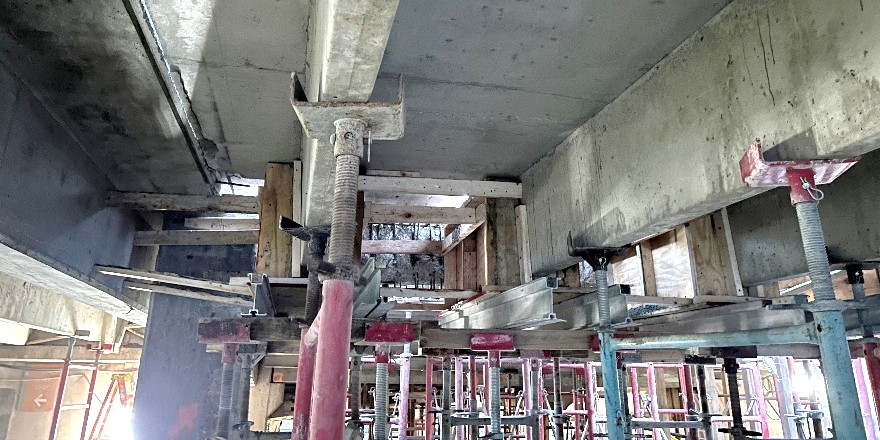
One of the greatest life-safety risks during repairs is loss of stability during construction. Shoring installation, temporary bracing, sequencing requirements, and load transfer procedures must be monitored by the contractor and verified by the special inspector.
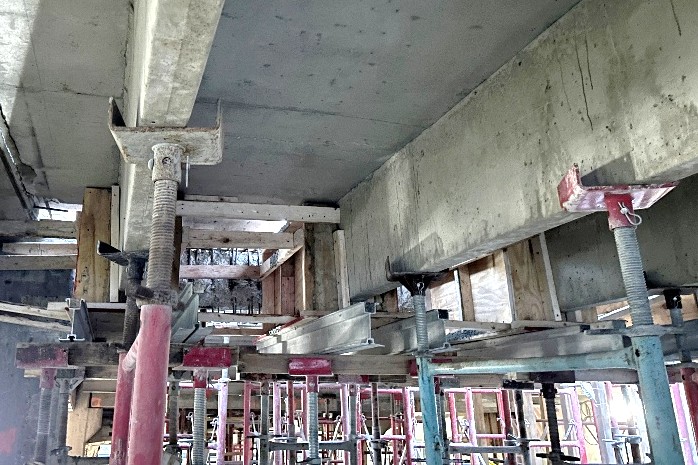
Temporary Shores Below Full Depth Slab Repair
Existing Condition Variations
Structural repair projects frequently involve conditions that are not fully observable during design and may only become apparent during demolition, removal of finishes, or exposure of concealed structural elements. As a result, field conditions may vary from those depicted in the contract documents and may necessitate evaluation by the Engineer of Record. The special inspector is responsible for objectively documenting concealed or unforeseen conditions encountered during construction, including deterioration, damage, dimensional discrepancies, or previously undocumented modifications.
Any condition that differs from the approved construction documents should be reported promptly to the appropriate project stakeholders to facilitate timely engineering review and resolution. Work affected by such discrepancies should not proceed until the Engineer of Record has evaluated the condition and provided direction as necessary. Throughout the process, detailed photographic documentation should be maintained to establish a clear and verifiable record of existing conditions, observed deficiencies, and subsequent corrective measures.
Documentation
Repair and rehabilitation projects typically generate a greater number of field revisions, engineering clarifications, and unforeseen conditions than new construction projects. Consequently, comprehensive documentation is essential to provide an accurate record of construction activities and demonstrate compliance with project requirements. Special inspection reports should clearly identify and describe existing conditions encountered, locations and extents of repairs performed, materials incorporated into the work, and the results of all required inspections and testing. Any modifications directed by the Engineer of Record, including changes to repair limits, procedures, or material requirements, should be documented in sufficient detail to establish traceability throughout the project. Photographic records should be maintained before, during, and after repair activities to document the progression of the work, support inspection findings, and provide a permanent record of completed repairs.
Areas Requiring the Highest Inspection Attention
Structural repair projects contain several activities that warrant heightened inspection attention due to their significance to the long-term performance and reliability of the completed repair. Particular emphasis should be placed on substrate preparation, as the effectiveness of repair materials is highly dependent upon proper removal of unsound material and preparation of the receiving surface.
Post-installed anchors and dowels should be carefully inspected to verify compliance with specified drilling, cleaning, embedment, and installation requirements, as these elements are critical in transferring loads between existing and new construction. Temporary shoring and stabilization systems require close observation to ensure that structural integrity is maintained throughout demolition and repair operations. Welding performed on existing structural steel should be monitored to verify compliance with approved procedures, welder qualifications, fit-up requirements, and applicable acceptance criteria.
Connections between new and existing structural elements should be thoroughly inspected to confirm that the intended load path and structural continuity are achieved. Additionally, inspectors should verify that all hidden or concealed deterioration identified during demolition has been removed or otherwise addressed in accordance with the approved repair documents prior to installation of repair materials, thereby ensuring that the completed repair is founded upon sound and suitable substrates.