An Engineering Insight authored by SK&A Associate Monika Crandall, PE, LEED AP. Follow Monika on Linked In.
How engineers interpret decay to solve the real problem behind the damage
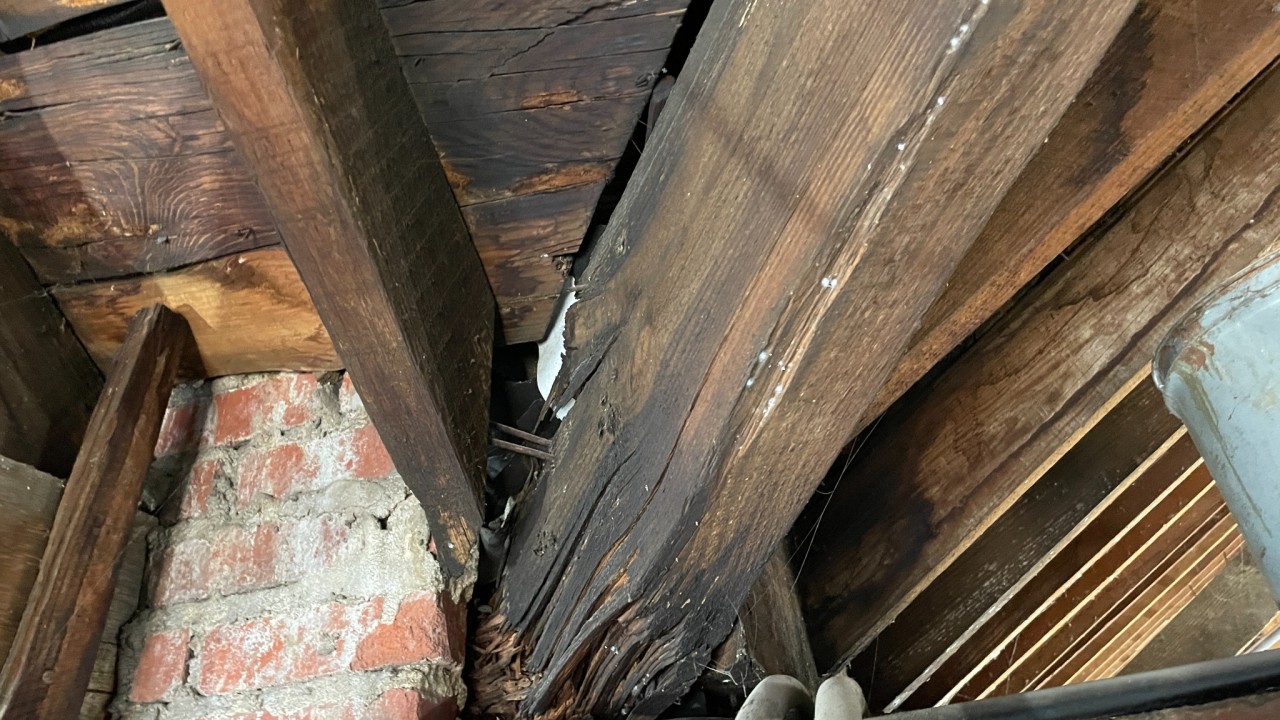
Not all wood rot looks the same, and on a roof that is approximately 100 years old, it rarely shows up in just one form.
In this case, the deterioration appears most consistent with long-term moisture intrusion, with advanced decay concentrated where the timber bears into masonry (Figure#1 – Original bearing detail). What is casually described as “rot” is often a combination of wet rot, localized brown-rot type decay, splitting, checking, and section loss from years of moisture cycling.
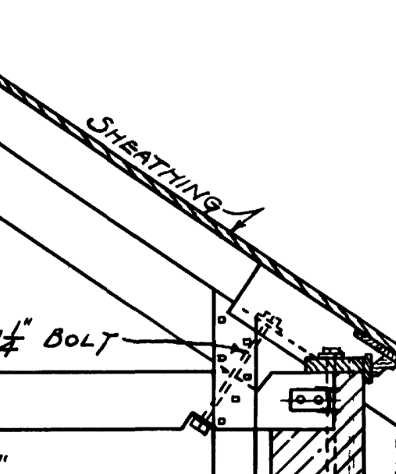
Figure#1 – Original bearing detail
When evaluating an existing wood roof, the question is not simply whether wood is damaged. The real questions are where the moisture is coming from, how much structural capacity has been lost, what can still be preserved, and how repairs can be detailed to avoid repeating the same problem.
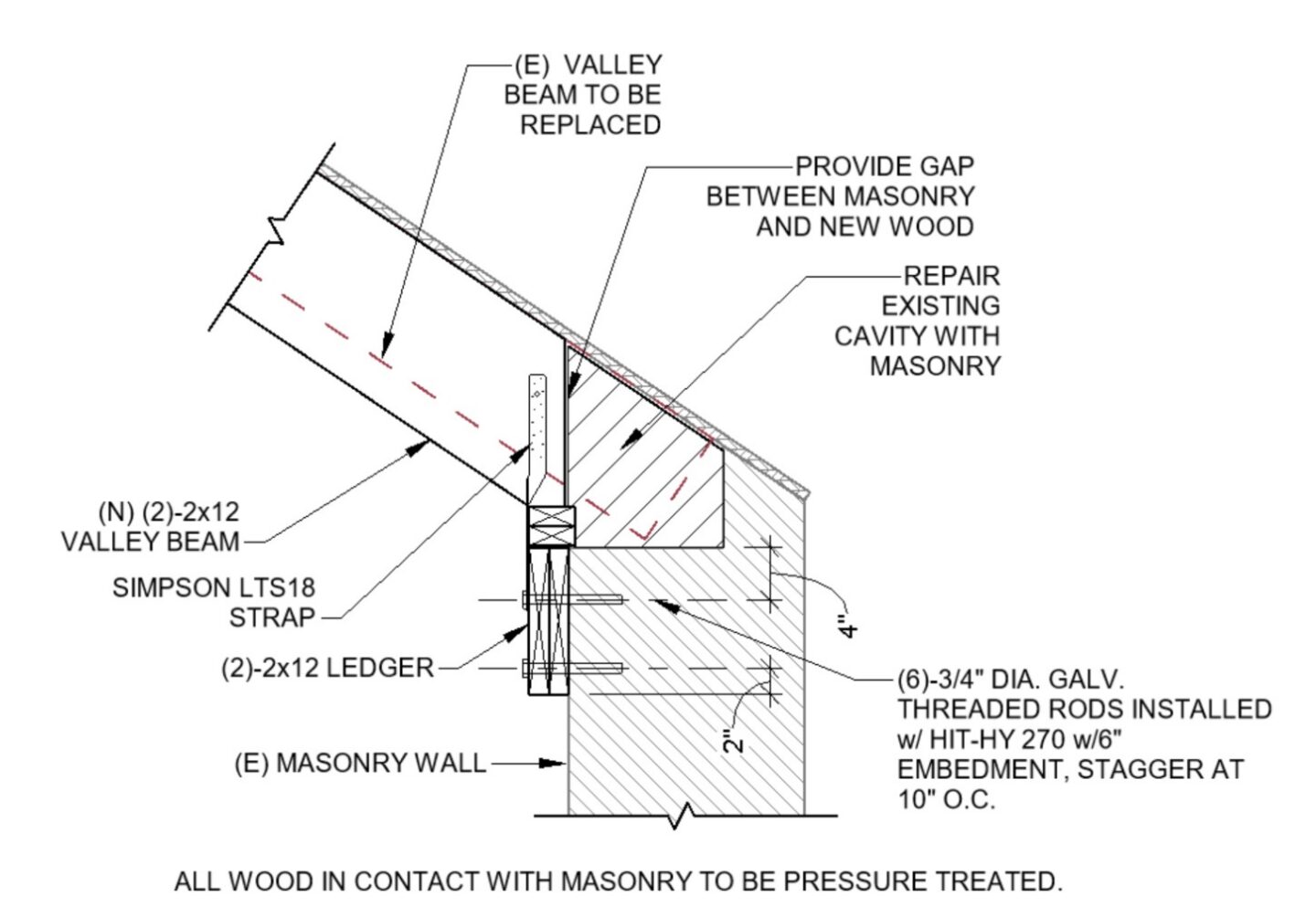
The proposed fix addresses the issue in several ways (Figure#2 – New bearing detail). All wood in contact with masonry is detailed to be pressure-treated. The new beam bearing is provided by a new ledger anchored to the masonry wall, and a gap is specified to avoid contact between the new framing and the masonry.
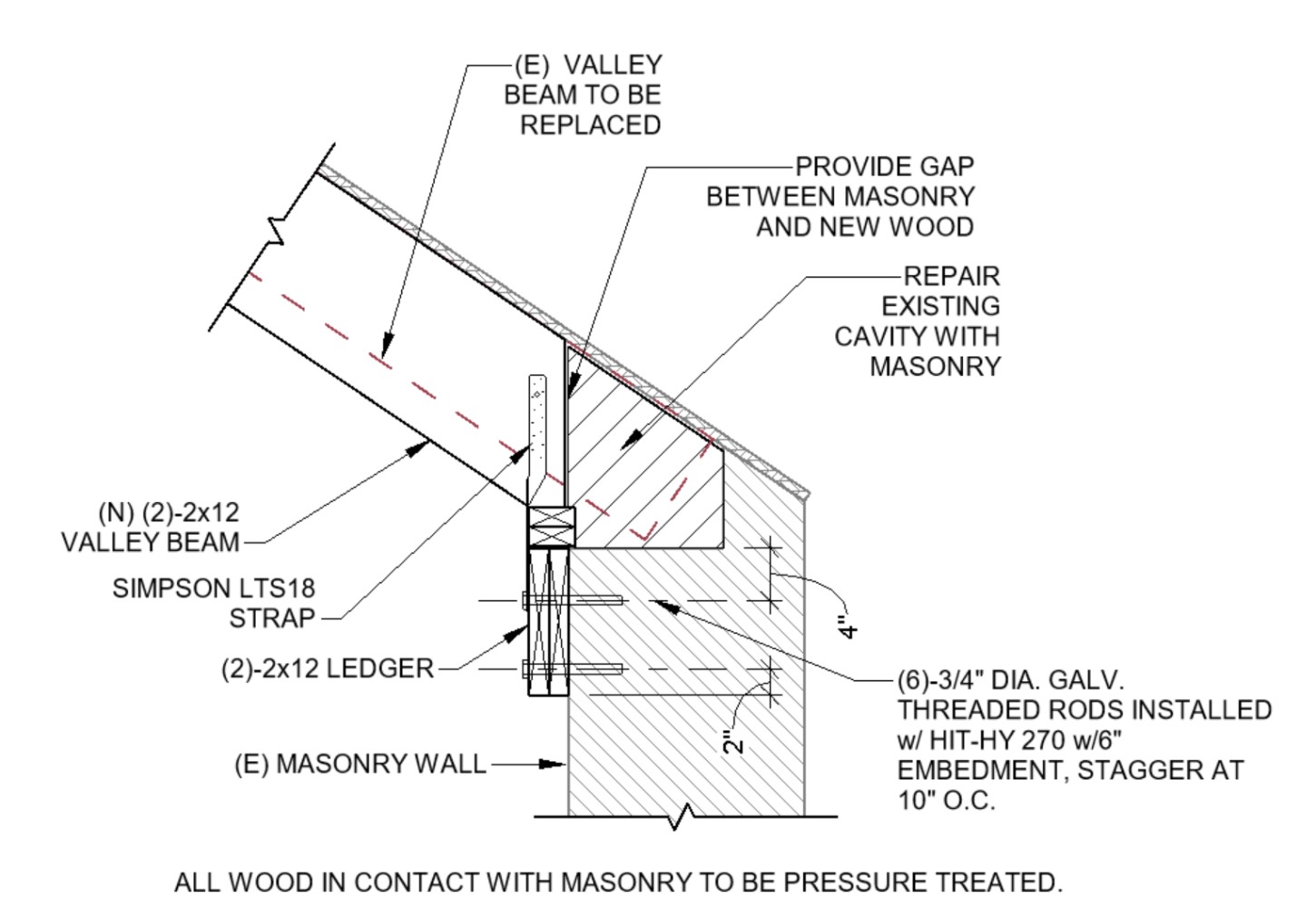
Figure #2 – New bearing detail
Durable solutions require more than replacing deteriorated material. They require understanding the original framing and addressing both the damage and the condition that caused it.
This insight was originally published by Monika Crandall, PE, LEED AP, on Linked In. View the original post and add your own comments.