An Engineering Insight authored by SK&A Associate Monika Crandall, PE, LEED AP. Follow Monika on Linked In.
How tendon layout, reinforcement, and sequencing shape successful slab modifications.
New openings in existing unbonded post-tensioned slabs are very achievable, but they require more than cutting concrete. The key is understanding how the modification affects both the slab and the tendon system.
That does not make post-tensioning a disadvantage. Post-tensioned slabs offer real benefits in span capability, structural efficiency, and floor plate flexibility. But when openings are introduced later, the existing system needs to be evaluated with a clear understanding of how it works.
The complexity depends on several factors, including the size and location of the opening, the existing tendon type and layout, the amount and location of conventional reinforcing, the framing geometry, and how forces are redistributed around the new discontinuity.
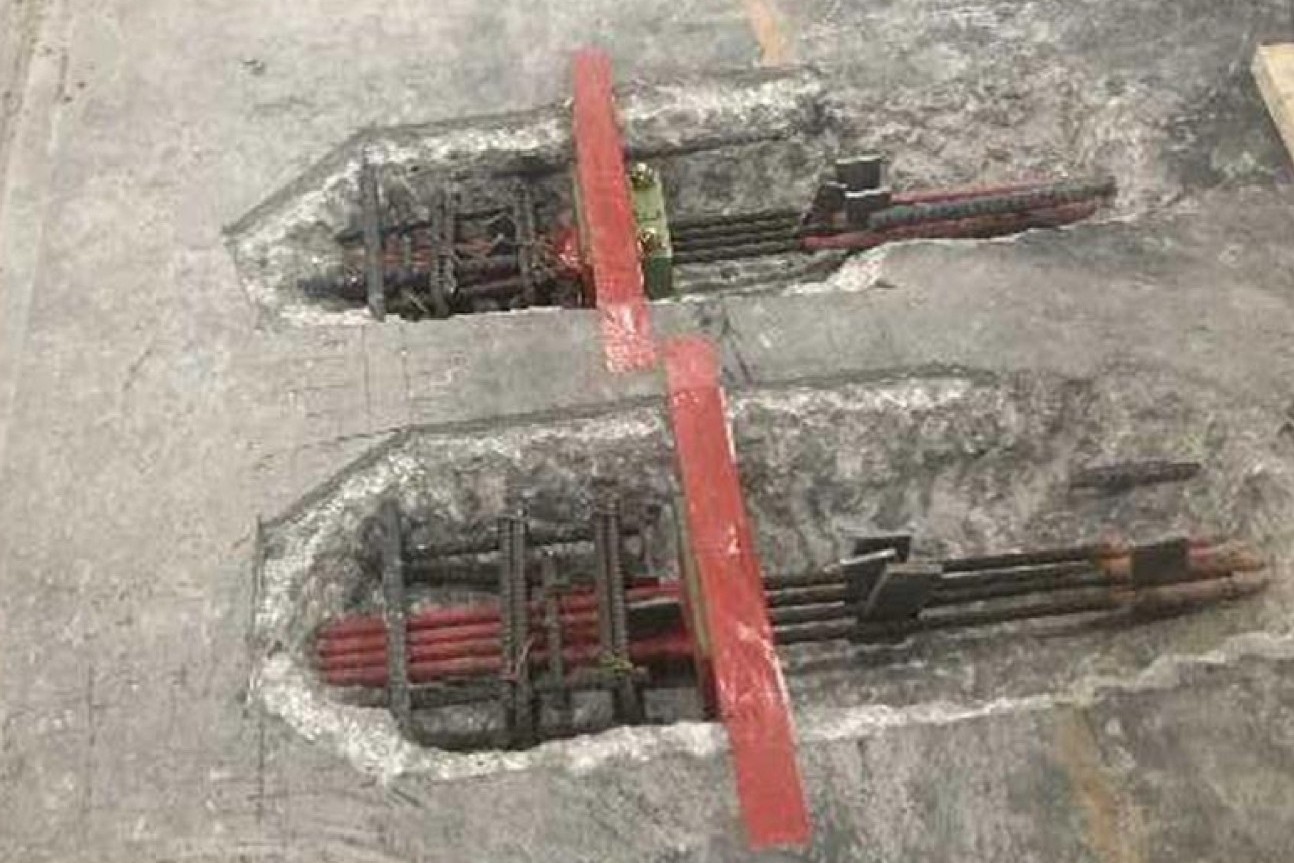
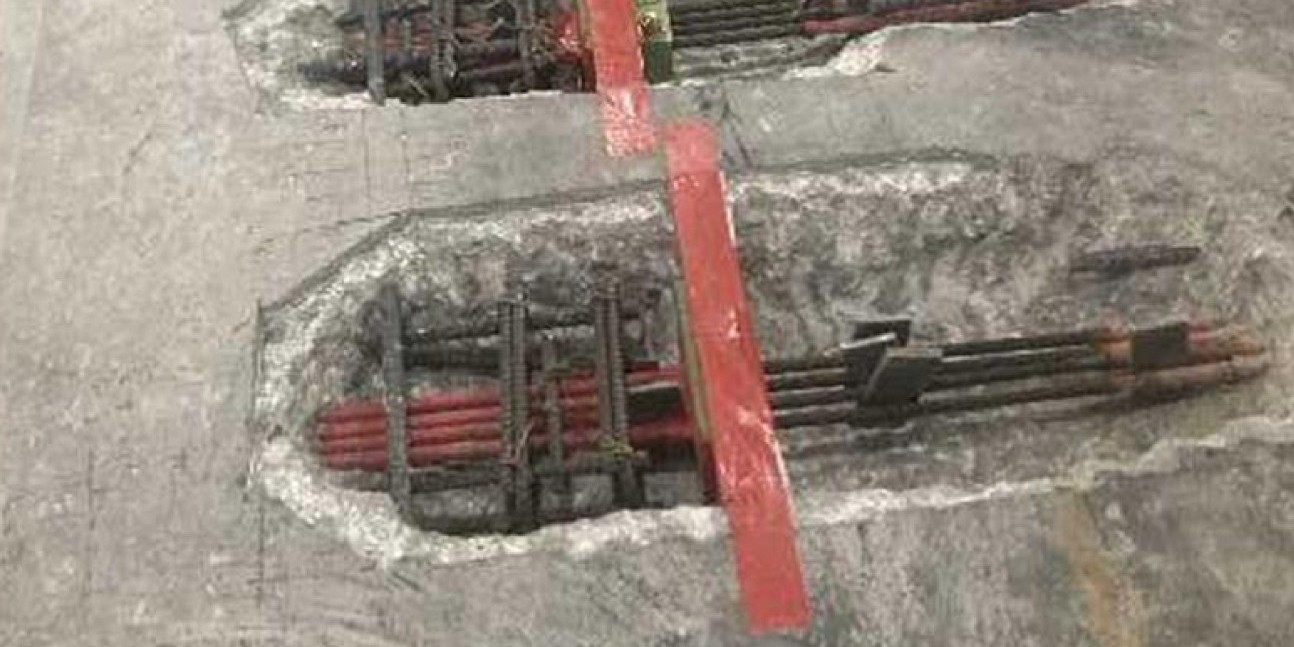
New tendon anchorage installed prior to opening demolition.
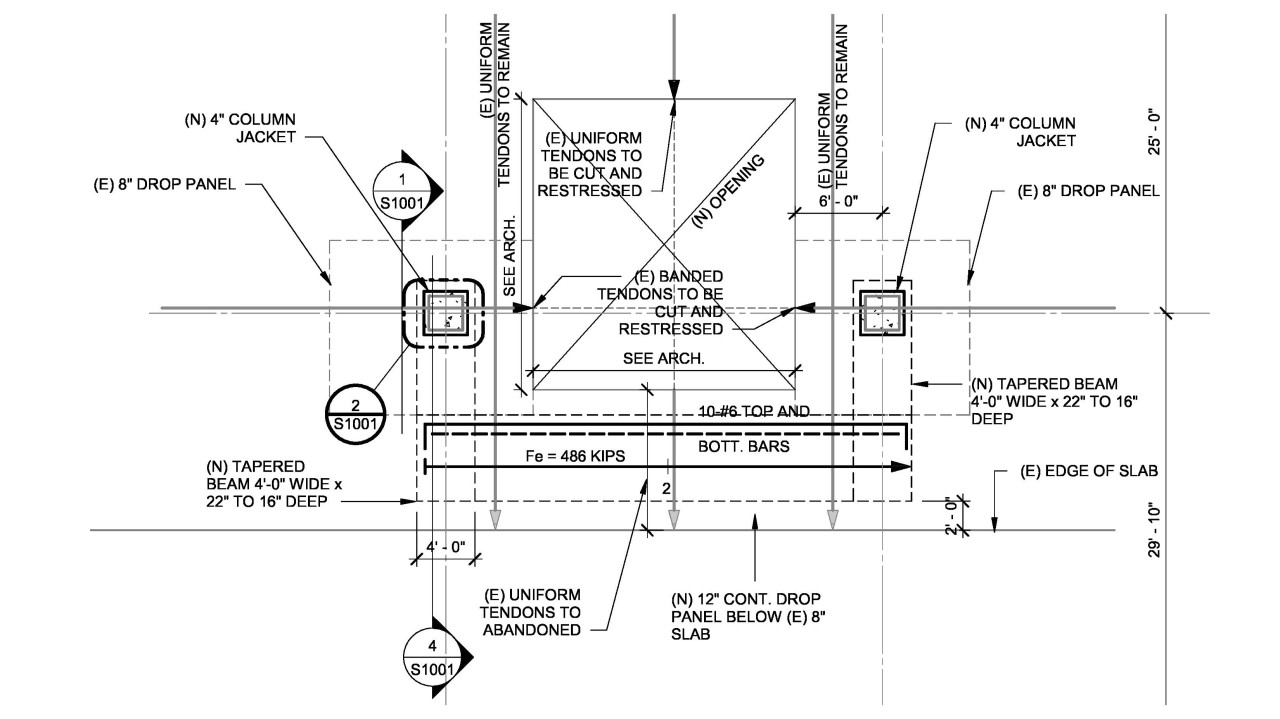
In many existing PT slabs on the East Coast, the tendons are unbonded. That means the strand is greased and enclosed in a plastic sheathing, so it is not bonded to the concrete along its length. Instead, the prestressing force is transferred at the anchorages. That distinction matters when creating new openings, because the work may involve localized shoring and will involve (in the majority of cases) locating and selectively de-tensioning tendons, resetting tendon profiles, re-anchoring and re-stressing affected tendons, adding supplemental reinforcing or local strengthening, and considering temporary conditions during construction.
In many cases, the most critical part of the work is not only the final reinforced condition, but the sequence required to get there while maintaining structural adequacy throughout the process.
The takeaway is not that openings in PT slabs are unusually difficult. It is that they are highly manageable when approached with the right level of analysis, detailing, and sequencing.
This insight was originally published by Monika Crandall, PE, LEED AP, on Linked In. View the original post and add your own comments.