An Engineering Insight authored by SK&A Principal Justin Long, PE, RBEC, BECxP. Follow Justin on Linked In.
The Science Behind “Unexplained” Tempered Glass Breakage
Understanding Nickel Sulfide (NiS) Inclusions
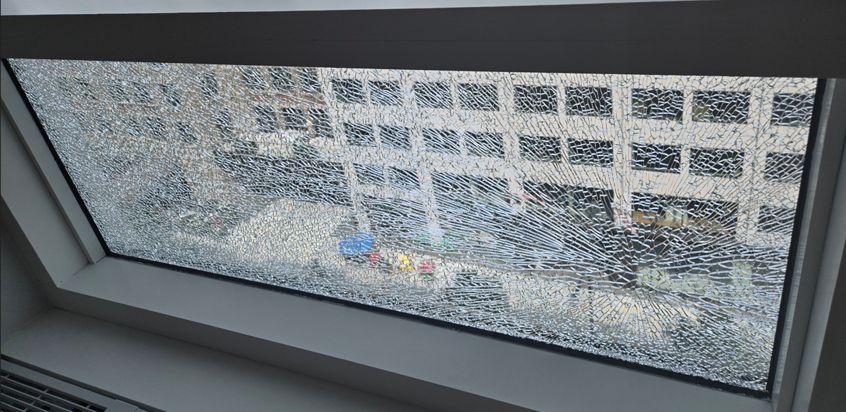
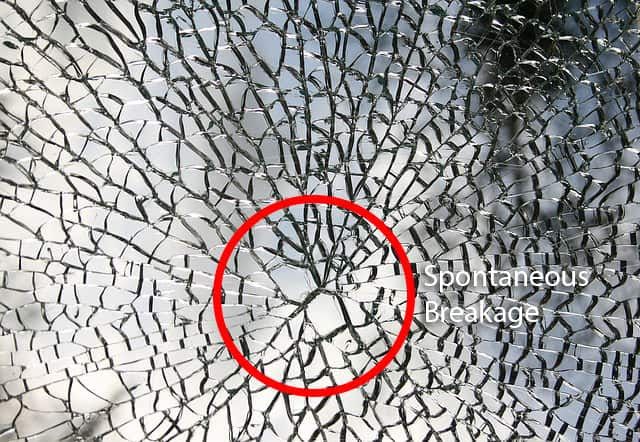
Few building failures are more alarming – or more misunderstood – than spontaneous glass breakage. When tempered glass fails without impact, weather events, or visible cause, the culprit is often Nickel Sulfide (NiS) inclusions.
How NiS Inclusions Form
NiS inclusions are microscopic contaminants introduced during glass manufacturing. They typically originate from trace nickel-bearing materials (e.g., stainless steel fragments) that enter the molten glass during melting. While invisible to the naked eye, these inclusions become problematic only after tempering.
Why Tempering Creates the Risk
During tempering, glass is rapidly cooled, locking the surface into compression and the core into tension. NiS inclusions exist in a high-temperature crystalline phase at the time of tempering. Over time, they slowly transform into a lower-temperature phase, which expands in volume. That expansion introduces localized tensile stress – often exceeding the strength of the glass – resulting in delayed, spontaneous breakage, sometimes months or years after installation.
How Manufacturers Mitigate the Risk
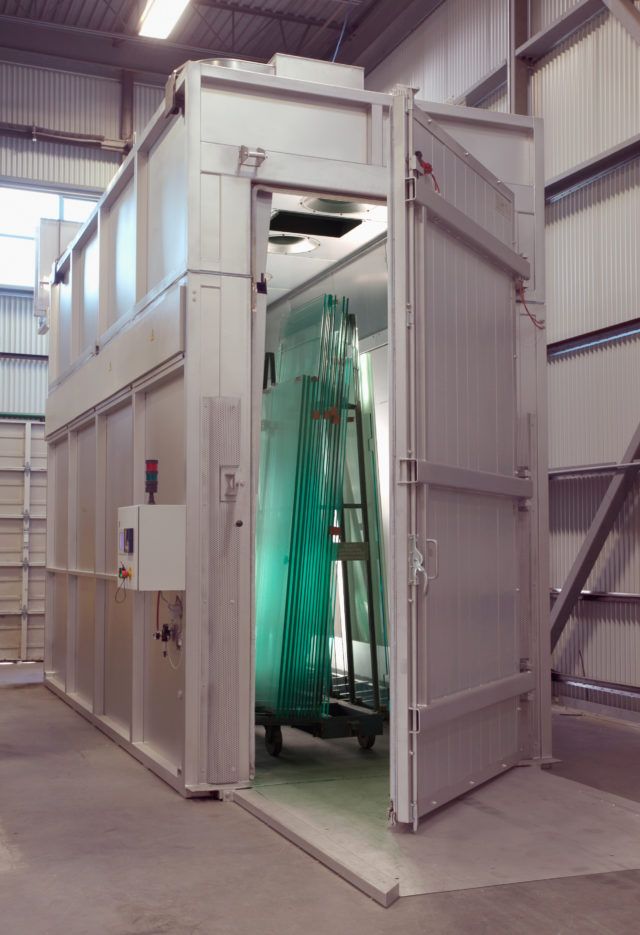
The primary prevention method is Heat Soak Testing (HST):
- Tempered glass is reheated and held at elevated temperature.
- This accelerates the NiS phase transformation.
- Glass panes containing critical inclusions fail in the plant—not on the building.
However, HST is not universally required unless explicitly specified.
Where Projects Go Wrong
Problems arise when:
- Heat soak testing is excluded to reduce cost
- QA/QC specifications are poorly written or unenforced
- Warranties are relied upon instead of prevention
Most glass warranties do not cover consequential damages – meaning broken glass may be replaced, but tenant disruption, safety hazards, scaffolding, and operational downtime are not.
The Operational Reality
A single spontaneous break can trigger:
- Emergency site closures
- Safety concerns and liability exposure
- Repeated failures across identical glass units
- Significant unplanned operational costs
At that point, the warranty offers little comfort.
The Takeaway
Spontaneous glass breakage isn’t a mystery – it’s a known risk with a known mitigation strategy. The real failure is often not technical, but contractual and procedural.
Good outcomes depend on:
- Clear specifications
- Enforced QA/QC requirements
- Understanding what warranties do, and do not, protect
This insight was originally published by Justin Long, PE, RBEC, BECxP, on Linked In. View the original post and add your own comments.
SK&A’s Building Enclosure Services team brings decades of experience and specialized technical expertise to aid in the design and construction of new buildings, as well as the evaluation and maintenance of existing buildings. Learn more.